
Home Renovation Services in Los Angeles, CA
Local Roofing Contractor Expertise
From Santa Monica to Downtown and the San Fernando Valley, a roofing contractor in Los Angeles, CA handles the most demanding climate in the state. Your roof battles intense UV exposure, temperature swings, and occasional heavy rains that crack shingles, degrade underlayment, and stress structural connections. We address these challenges with expert roof installation, repair, and maintenance tailored for LA's specific conditions.
How We Work
A clear process keeps you informed at every stage, from inspection through final walkthrough.
Step-by-Step Process
Inspection
We assess shingles, flashing, underlayment, and drainage. Los Angeles roofs need extra scrutiny for UV damage and heat-related degradation common in the region.
Estimate & Permitting
We provide detailed pricing and handle all Los Angeles Department of Building and Safety permits required for your project.
Installation & Repair
Our crew installs or repairs your roof using materials rated for LA's heat, UV exposure, and seismic activity. Proper installation prevents thermal expansion issues.
Inspection & Closeout
Building and Safety inspects the work. Once approved, we finalize the permit and provide documentation for your records.
You'll always know what's happening next—and when.
Our Services
From Koreatown to Culver City and beyond, we provide complete roofing solutions.
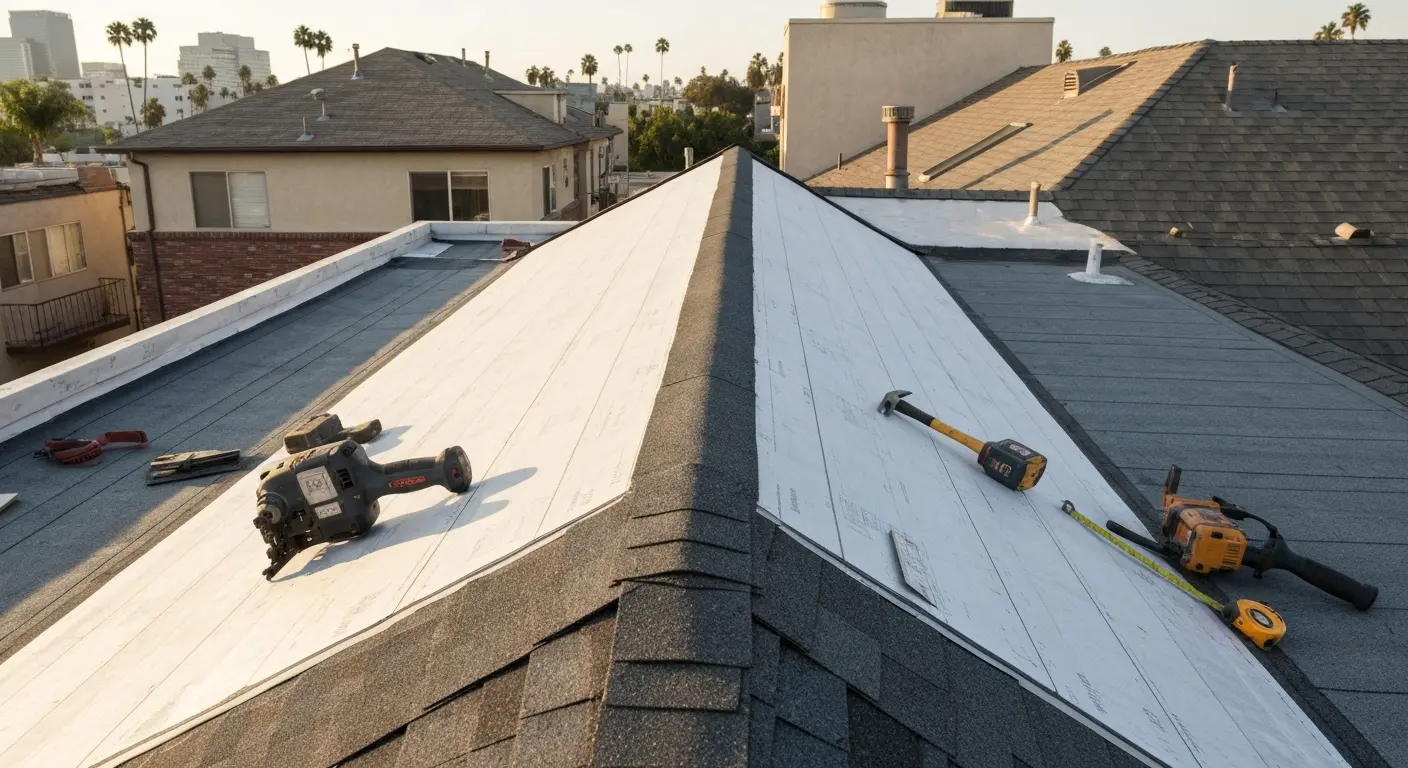
Professional roof installation in Koreatown, handling mid-rise apartments and historic residential buildings
Roof Installation
New roofs require structural planning, fire-rated materials, and seismic-aware fastening. We install asphalt shingles, metal, tile, and low-slope systems designed to survive LA's climate shifts and meet Title 24 energy standards.
- Fire-rated Class A, B, or C materials meeting Los Angeles Building Code
- Cool roof coatings that reflect UV rays and lower energy bills
- Seismic-resistant flashing and fastening
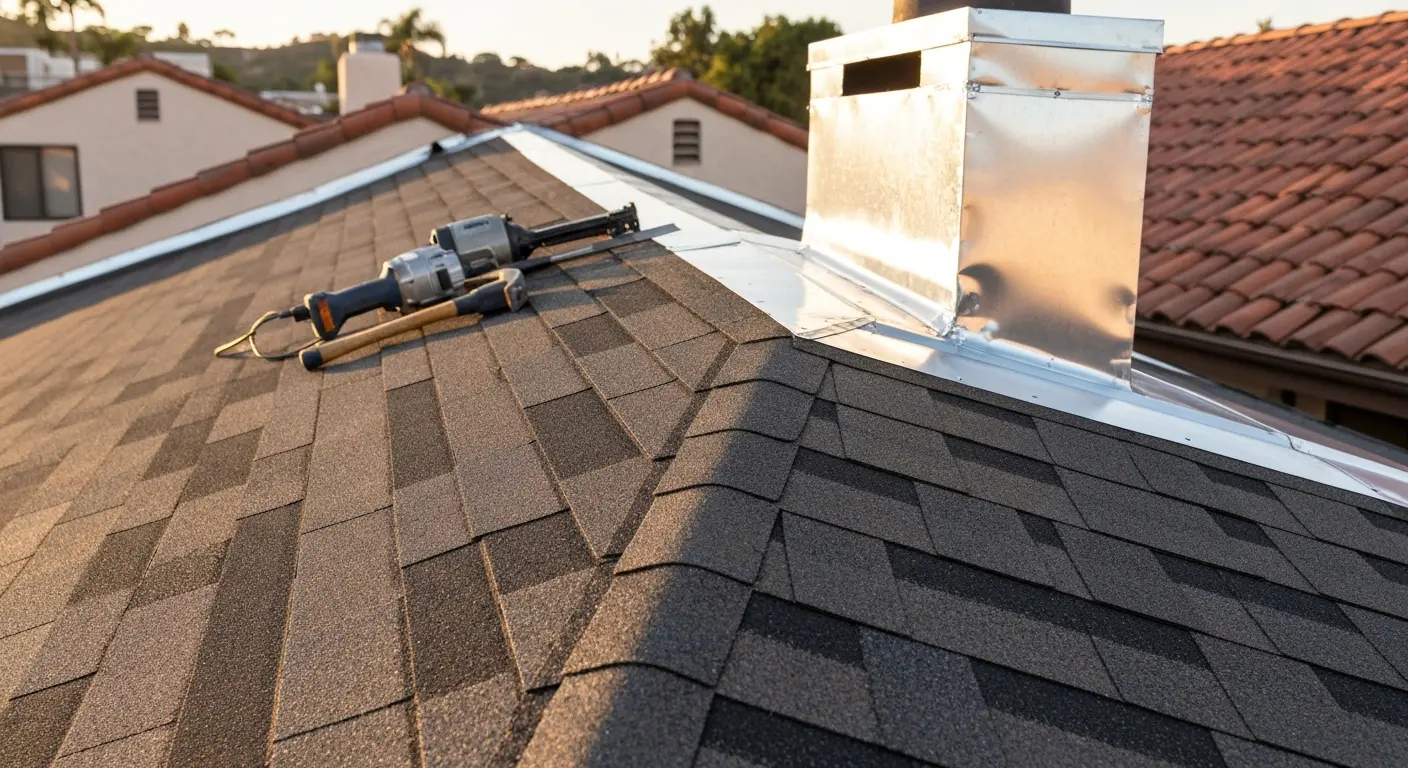
Repairing sun-damaged shingles and flashing failures in Hollywood Hills properties
Roof Repair
UV damage and heat cracking are common in Los Angeles. We repair leaks, replace damaged shingles or tiles, seal flashing gaps, and address underlayment failures before they spread. Small fixes prevent expensive replacement.
- Leak detection and localized patching
- Flashing and valley repairs to stop water entry
- Underlayment replacement without full roof removal
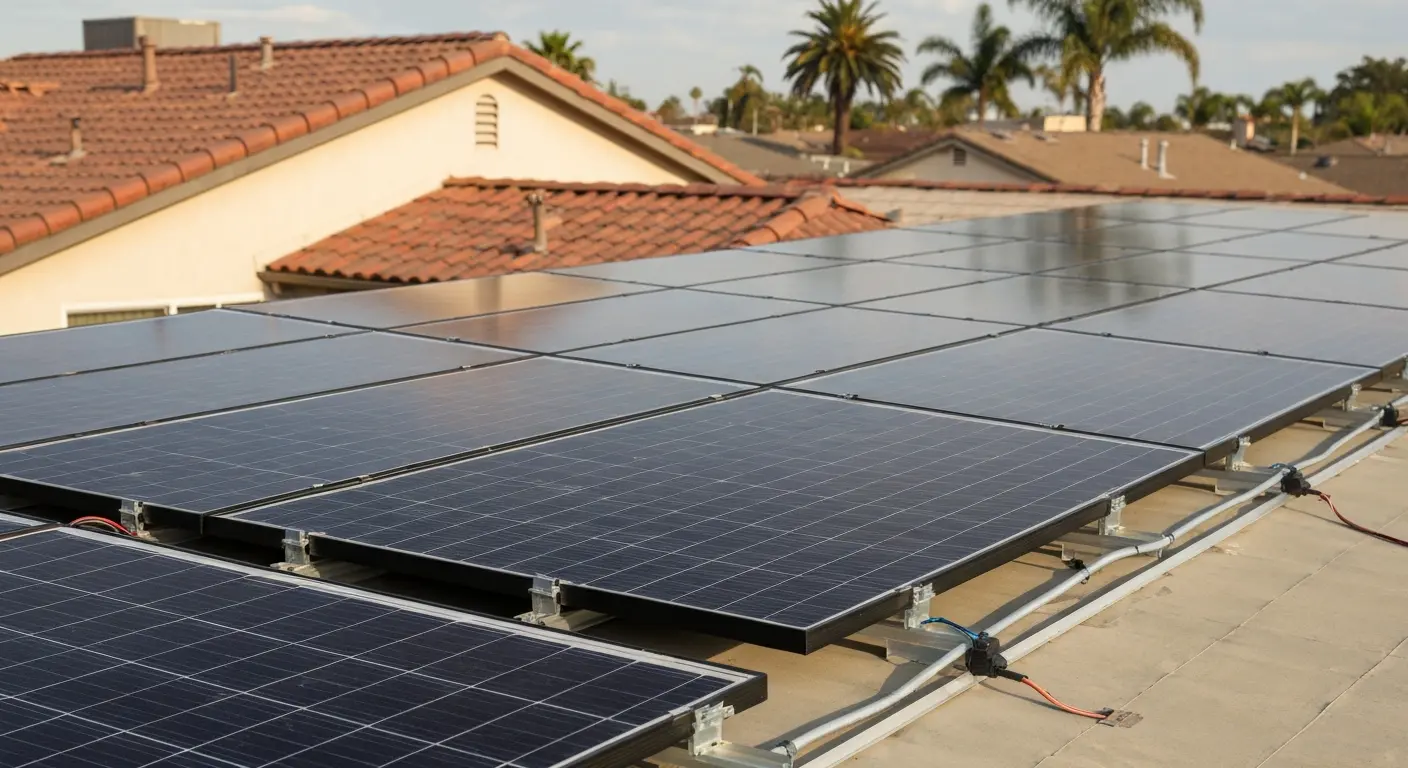
Solar energy system installation in Pasadena, integrating structural support with roofing assembly
Solar Energy Installation
Solar arrays must integrate with roof structure, flashing, and electrical systems. We coordinate placement to maximize sun exposure while distributing loads safely across rafters and meeting all permitting codes for Los Angeles County.
- Structural load analysis and mounting system design
- Waterproofing and flashing integration
- Permit-ready electrical conduit routing
Why Local Expertise Matters
Los Angeles roofing isn't generic. The city's climate demands specific knowledge.
A roof that survives 20 years in the Midwest can lose 3–5 years of effective life in Los Angeles' intense UV exposure, especially in neighborhoods like Echo Park and Highland Park where western afternoon sun beats down relentlessly.
UV Damage & Heat Expansion
Asphalt shingles crack and curl under constant sun. Daily temperature swings cause roofing materials to expand and contract, stressing fasteners and flashing. Cool roof materials with high solar reflectance (SRI) reduce heat absorption and cooling costs.
Fire Safety & Code Compliance
Los Angeles prohibits wood shake roofs. All new installations and replacements must meet Class A fire ratings. Properties in WUI (Wildland Urban Interface) zones face stricter requirements. Title 24 energy standards mandate reflective roofing on new builds and major replacements.
Seismic & Wind Considerations
Los Angeles sits in an earthquake zone. Flashing, fasteners, and roof-to-wall connections must resist lateral forces. Wind uplift stress requires proper nailing patterns and rated assemblies. Contractors who ignore seismic details create hidden vulnerabilities that surface years later.
500+ roofing projects completed across Los Angeles neighborhoods
Experience with mid-rise apartments, historic homes, flat commercial roofs, and tile installations across diverse building types and fire zones.
Serving Los Angeles & Surrounding Areas
We work throughout Los Angeles County with experience across diverse neighborhoods.
Coverage Areas
West LA, Koreatown, Downtown, Hollywood Hills, Culver City, Pasadena, Burbank, Glendale, Silver Lake, Echo Park, Highland Park, Santa Monica, and the San Fernando Valley. We're familiar with building codes, parking patterns, HOA restrictions, and architectural styles across the city.
Permit & Inspection Support
Most roof replacements and repairs exceeding 100 square feet require permits from the Los Angeles Department of Building and Safety. We handle all paperwork, inspections, and code compliance. Minor repairs like patching a few shingles may not require permits—we'll advise you upfront.
Residential Properties
Single-family homes, duplexes, and multi-unit apartments. We navigate HOA restrictions, historic preservation rules, and parking constraints common in older LA neighborhoods.
Commercial Roofs
Flat and low-slope roofs on office, retail, and industrial buildings. TPO, PVC, and built-up systems designed for commercial loads and maintenance access.
Frequently Asked Questions
Do I need a permit for a roof repair in Los Angeles?
Minor repairs like patching or replacing a few shingles typically don't require permits. Once repairs exceed 100 square feet or involve structural changes, Los Angeles Department of Building and Safety requires a permit and inspection. We'll confirm your project's permit status upfront.
Can I install a new roof over my existing roof in Los Angeles?
In some cases, yes. If you have solid sheathing and the existing material permits it (not wood shake), a new roof can be installed on top. Clay and concrete tiles must be completely removed before reroofing with any material. When 50 percent or more of roof area is replaced within one year, the entire roof must meet current code standards.
What roofing materials meet Los Angeles fire codes?
All new roofs must achieve Class A, B, or C fire ratings. Asphalt shingles, metal roofing, and tile all work when rated. Los Angeles strictly prohibits wood shake and shingle roofs anywhere in the city. Properties in wildfire zones (WUI, FBZ, VHFH) require Class A materials only.
How often should I have my roof inspected?
Annual inspections are recommended for Los Angeles roofs, especially after summer heat and occasional storms. Roofing professionals advise inspections to catch cracked shingles, flashing gaps, and underlayment failures early, preventing costly damage down the line.
What is Title 24 and why does my Los Angeles roof need to comply?
Title 24 is California's energy efficiency standard. Cool roofs with minimum solar reflectance (SRI) reduce heat absorption and cooling costs. All new roofs and major replacements must meet Title 24. If your existing roof doesn't comply, a replacement triggers the requirement and failed inspections can delay projects.
How do HOA rules affect my roofing project in Los Angeles?
Many HOA communities restrict roofing material color and type to maintain neighborhood uniformity. HOA architectural review and city building permits are separate requirements—you may need to satisfy both. Always check your CC&Rs and submit plans to your HOA before starting work.
DISCOVER WHAT OUR CUSTOMERS HAVE TO SAY ABOUT US
REVIEWS
proudly serving these areas
Riverside, CA
Los Angeles, CA
Hollywood, CA
Beverly Hills, CA
Santa Monica, CA
Venice, CA
Downtown Los Angeles, CA
Pasadena, CA
READY TO take the next step?
get a free quote TODAY!
COMPANY
(626) 244-4503
QUICK LINKS
our services
service areas
operating HOURS
Mon: 9:00 am - 5:00 pm
Tue: 9:00 am - 5:00 pm
Wed: 9:00 am - 5:00 pm
Thu: 9:00 am - 5:00 pm
Fri: 9:00 am - 5:00 pm
Sat: 9:00 am - 5:00 pm
Sun: 9:00 am - 5:00 pm